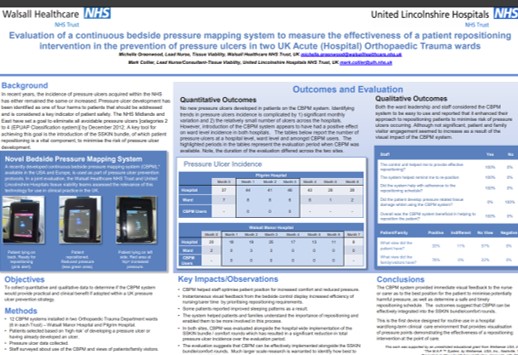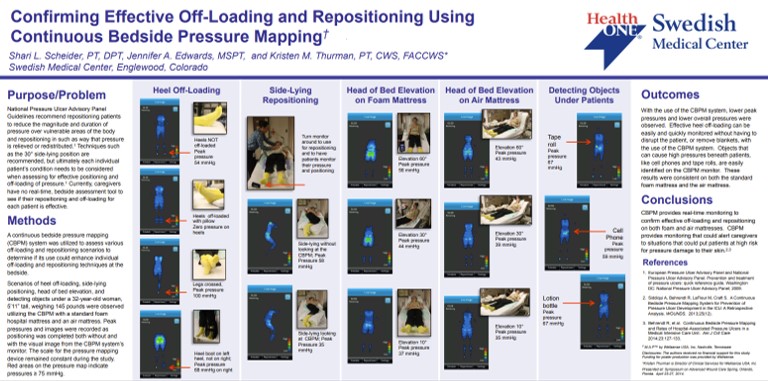
A study at Swedish Medical Center found that Continuous Bedside Pressure Mapping confirmed effective off-loading and repositioning, consistently lowered peak pressures by up to 55%, and identified hidden objects such as phones and tape rolls that created high pressure beneath patients.

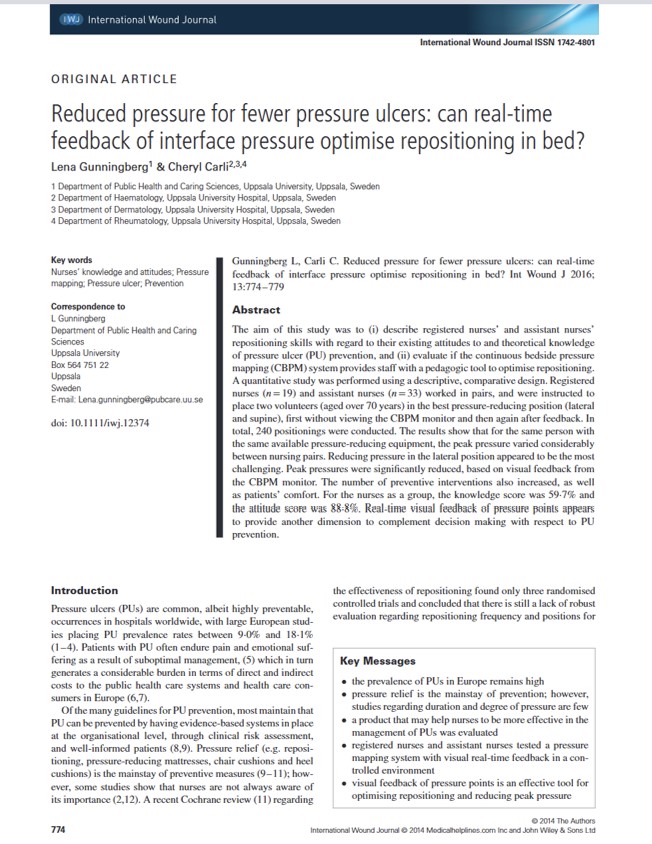
Real-time pressure visualization significantly reduced peak interface pressures and increased both patient comfort and the number of pressure-reducing interventions performed by nurses. Staff found the system easy to use and viewed it as a valuable tool for improving repositioning technique.

Real-time interface-pressure feedback supports better bedside practice by helping nurses identify effective repositioning targets, increasing pressure-reducing interventions, and reinforcing technique through immediate confirmation rather than assumption.

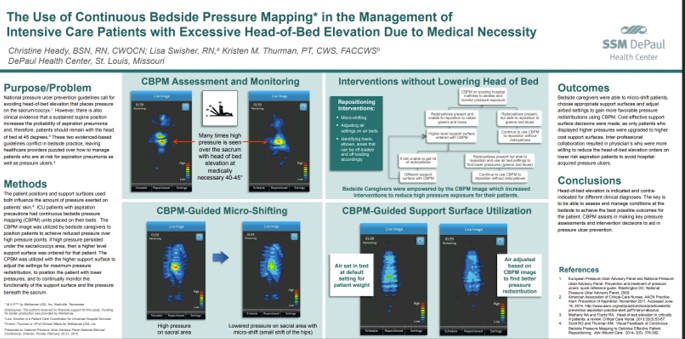
Visual feedback from continuous bedside pressure mapping enabled caregivers to reposition patients more effectively, lowering high pressures and improving care.

Visual pressure feedback improves day-to-day nursing workflow by making repositioning more teachable and repeatable, helping caregivers quickly identify high-pressure areas and adjust positioning until pressure reduction is confirmed.

Visual feedback from continuous bedside pressure mapping enabled caregivers to reposition patients more effectively, lowering high pressures and improving care

This UAB tertiary teaching-hospital study found that patients who developed hospital-acquired pressure ulcers incurred substantially higher costs and longer stays. Adjusted analyses showed costs of $29,048 vs $13,819 and length of stay of 20.9 vs 12.7 days, confirming pressure ulcers independently drive excess inpatient utilization beyond baseline severity.

This UAB tertiary teaching-hospital study found that patients who developed hospital-acquired pressure ulcers incurred substantially higher costs and longer stays. Adjusted analyses showed costs of $29,048 vs $13,819 and length of stay of 20.9 vs 12.7 days, confirming pressure ulcers independently drive excess inpatient utilization beyond baseline severity.

This work highlights the training and technique benefit of biofeedback: staff can use live pressure visualization to refine repositioning in real time and standardize “what good looks like,” improving consistency of technique across caregivers.

At a Dallas-area long-term acute care facility, real-time pressure visualization reduced average peak pressures by 40% – from 78 mmHg to 47 mmHg. 100% of caregivers reported more effective repositioning with the pressure image than without it, including for patients too medically complex to fully turn. Hidden objects beneath patients – including a bedpan producing a peak pressure of 107 mmHg – were identified and resolved immediately through visual confirmation.