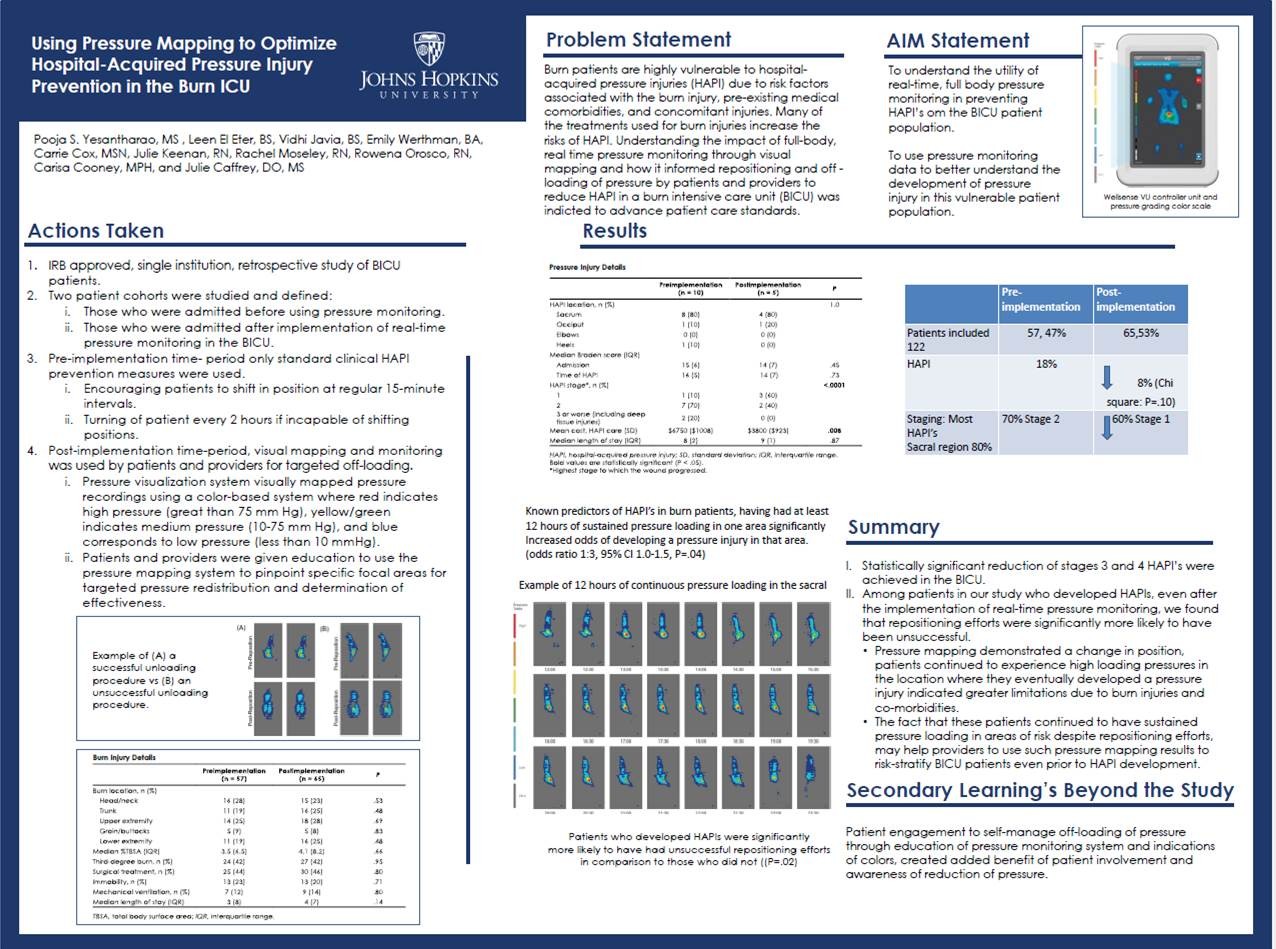
At the Johns Hopkins Burn Center, real-time pressure mapping reduced the hospital-acquired pressure injury rate by 44.4%, eliminated full-thickness pressure injuries, and lowered costs by 43.8%, demonstrating significant effectiveness in the burn ICU.​ Read Full Article
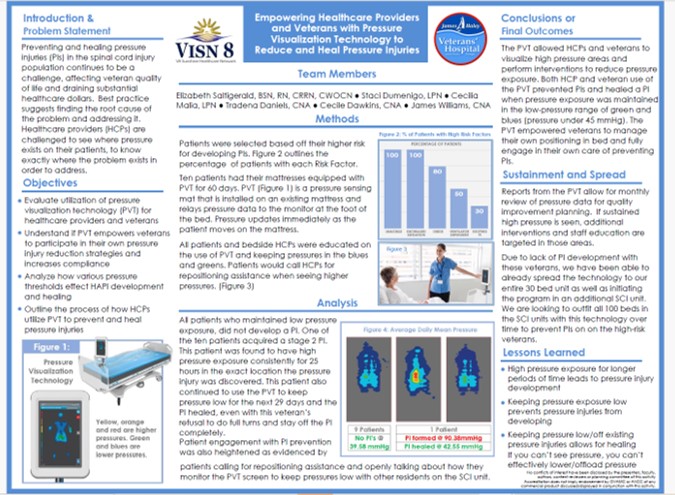
A clinical poster from the James A. Haley Veterans’ Hospital (VISN 8) showed that with pressure visualization technology, 90% of high-risk spinal cord injury patients avoided new pressure injuries, and existing Stage 2 injuries healed when pressure was reduced. Read Full Article
In two acute orthopedic trauma wards, patients and families reported the pressure visualization system was helpful, indicating strong engagement with the care process. The findings suggest that making pressure visible can improve patient and family understanding of repositioning goals and increase participation in prevention efforts. Read Full Article
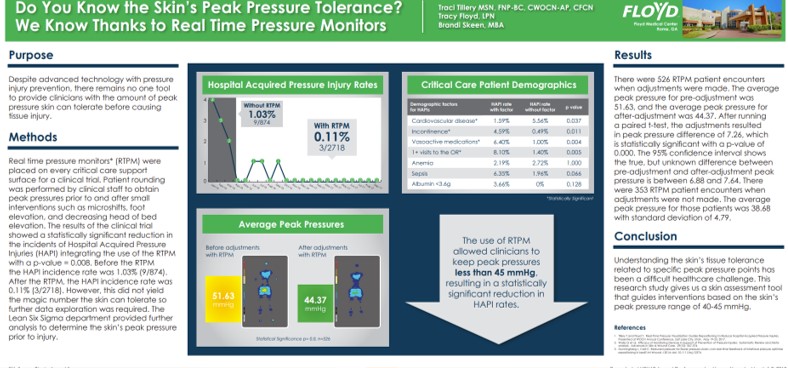
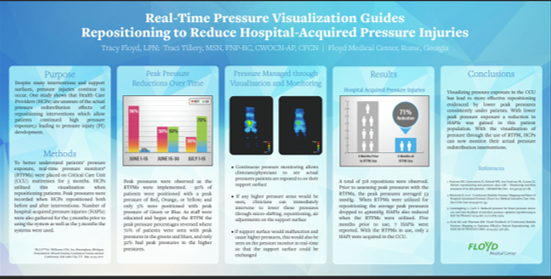
This Floyd Medical Center poster showed that using real-time pressure monitoring reduced hospital-acquired pressure injuries (HAPIs) by nearly 90% and enabled staff to maintain peak pressures below ~45 mmHg, a threshold associated with significantly lower HAPI rates. Read Full Article
In the medical ICU at Henry Ford Hospital, use of a continuous bedside pressure mapping system reduced hospital-associated pressure ulcer incidence by 81% compared to standard care, confirming that real-time visual feedback enables more effective repositioning and prevention Read Full Article
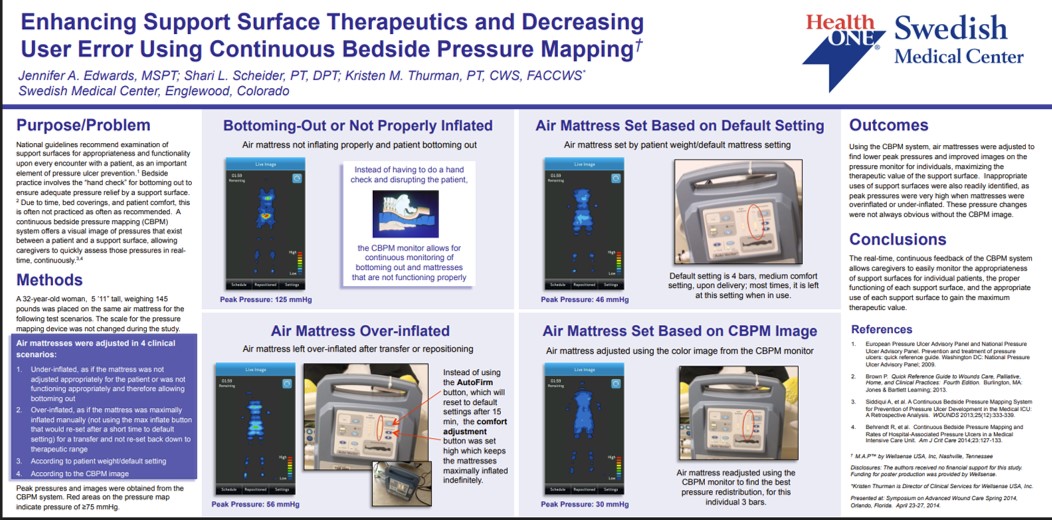
Continuous bedside pressure mapping functioned as a real-time “quality control” layer for staff by quickly exposing common setup and support-surface errors (eg, bottoming out, over-inflation, incorrect default settings) and guiding corrective actions at the bedside. Read Full Article
At Swedish Medical Center, Continuous Bedside Pressure Monitoring revealed issues such as bottoming out, over-inflation, and improper default settings, and guided mattress adjustments that reduced peak pressures by up to 76%. Read Full Article
This real-world clinical poster from Floyd Medical Center shows that using a real-time pressure visualization monitor led to a 71% reduction in hospital-acquired pressure injuries (HAPIs) over 5 months in the critical care unit, by guiding staff to reposition patients more effectively and reduce peak pressure exposures. Read Full Article
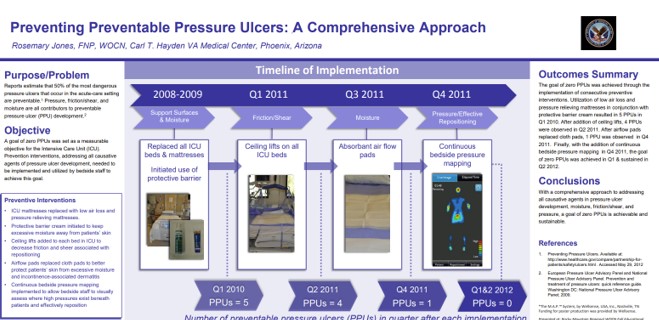
At the Carl T. Hayden VA Medical Center, a stepwise prevention program that included real-time pressure visualization reduced preventable pressure ulcers (PPUs) from 5 per quarter to 0, maintaining 0 PPUs across 2 consecutive quarters. Read Full Article
Pressure visualization can be used as a structured education tool for appropriate patients, enabling them to learn and reliably perform self-repositioning with clear visual guidance, reducing staff burden while keeping turning technique verifiable. Read Full Article