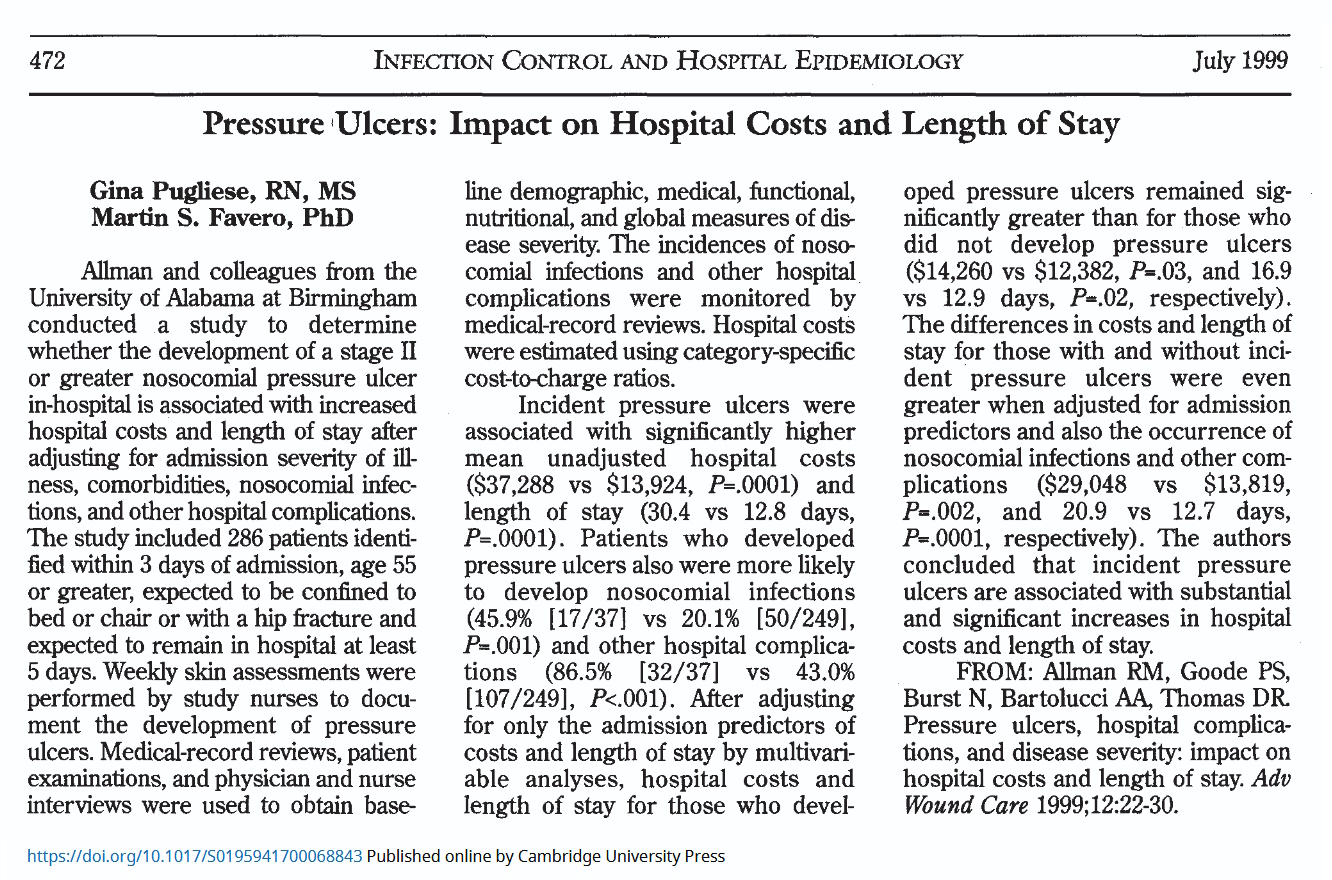
This University of Alabama at Birmingham hospital study found that developing a hospital-acquired Stage II+ pressure ulcer was associated with substantially higher hospital costs and longer stays. Mean unadjusted costs were $37,288 vs $13,924 and LOS 30.4 vs 12.8 days. Even after adjustment, costs and LOS remained significantly higher. Read Full Article
Mike Piskie
This University of Alabama at Birmingham hospital study found that developing a hospital-acquired Stage II+ pressure ulcer was associated with substantially higher hospital costs and longer stays. Mean unadjusted costs were $37,288 vs $13,924 and LOS 30.4 vs 12.8 days. Even after adjustment, costs and LOS remained significantly higher. Read Full Article
This Johns Hopkins-led meta-analysis reports that the use of pressure monitoring is associated with an 88% reduction in the risk of developing pressure injuries, demonstrating their effectiveness as a clinical prevention tool. Read Full Article
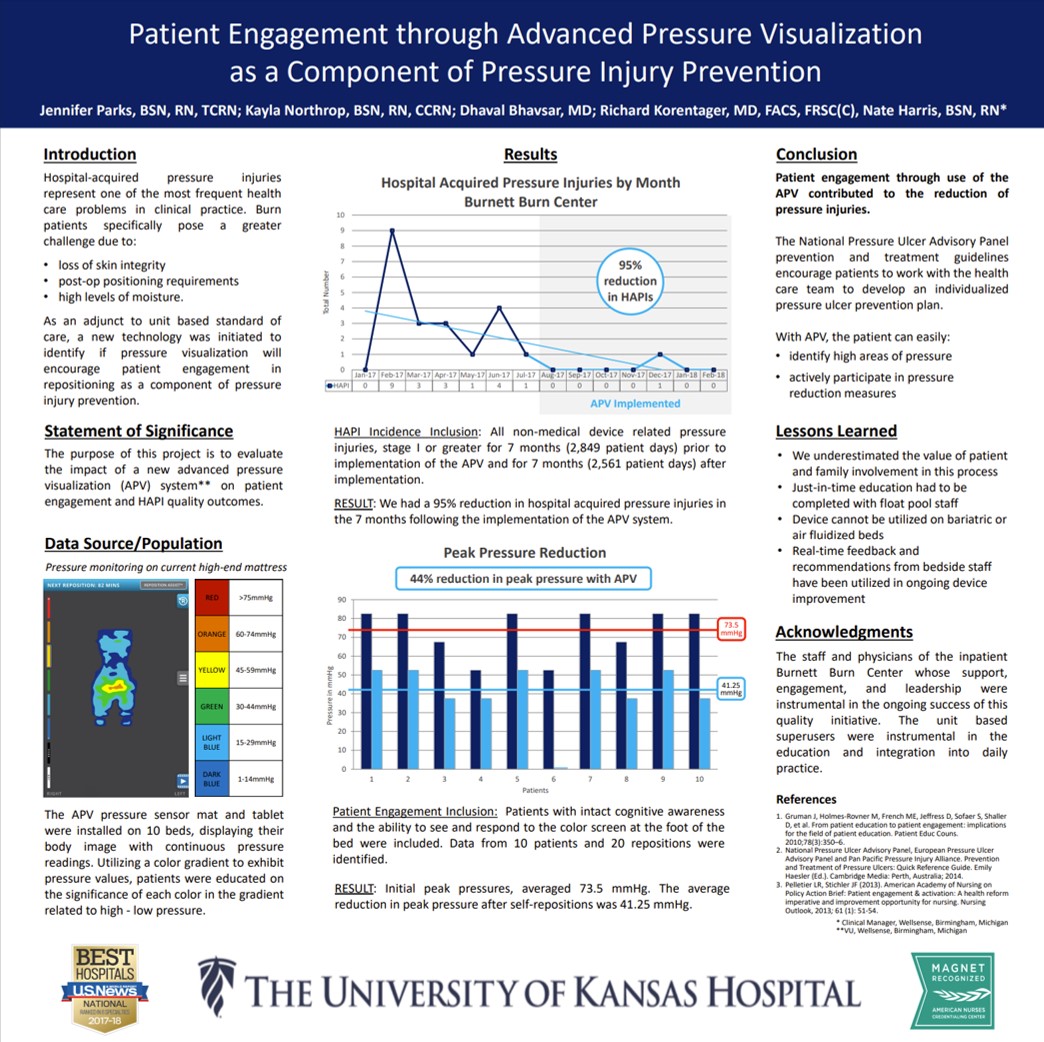
At the University of Kansas Hospital Burnett Burn Center, Advanced Pressure Visualization resulted in a 95% reduction in hospital-acquired pressure injuries (27 down to 1) and a 44% reduction in peak pressures, showing the effectiveness of patient engagement with real-time pressure feedback. Read Full Article
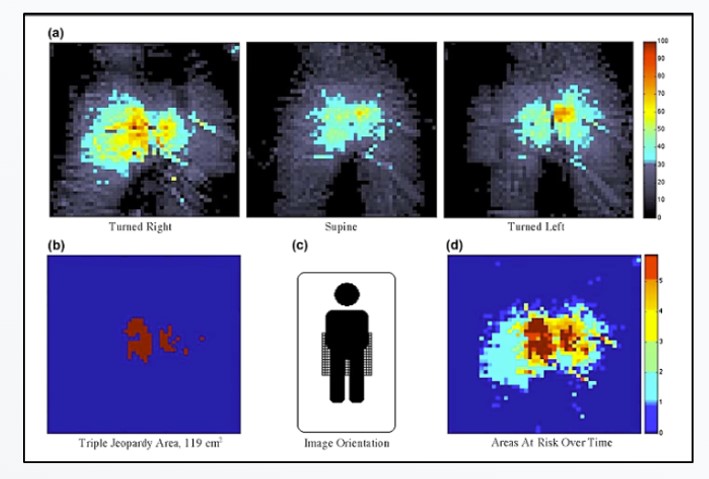
This peer-reviewed University of Florida study found that after repositioning, elevated sacral pressure persisted in over 95% of turns, leaving patients at ongoing pressure injury risk. The findings show that turning alone does not reliably offload pressure and that pressure visualization is needed to confirm effective offloading. Read Full Article
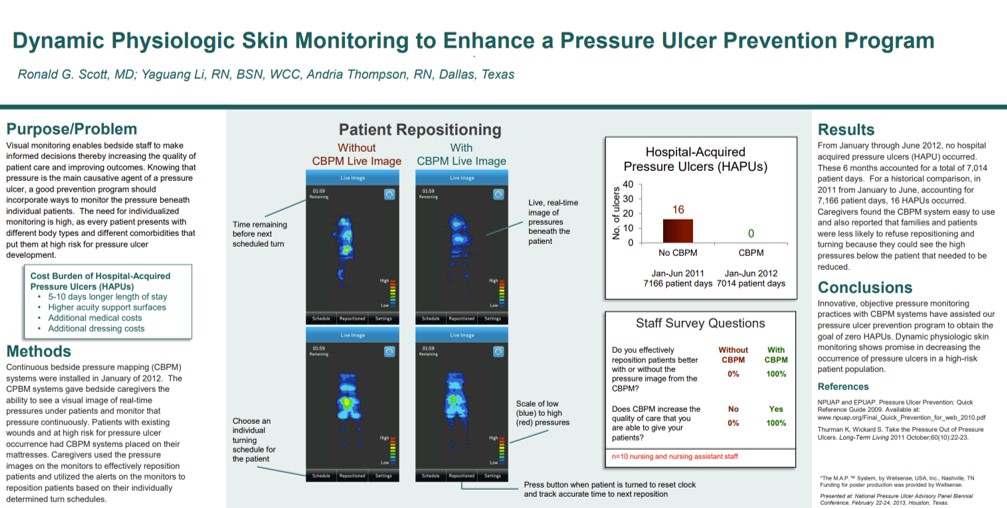
Methodist Dallas Medical Center achieved 100% elimination of hospital-acquired pressure ulcers over 7,014 patient days with continuous pressure visualization, compared to 16 HAPUs the prior year with visualization. Staff reported 100% agreement that visualization improved repositioning effectiveness and reduced pressure exposure. Read Full Article
In a retrospective analysis at Henry Ford Hospital’s medical ICU, continuous bedside pressure mapping reduced pressure ulcer incidence by 94% and was reported by staff to improve repositioning effectiveness, comfort, and adherence to protocols. Read Full Article
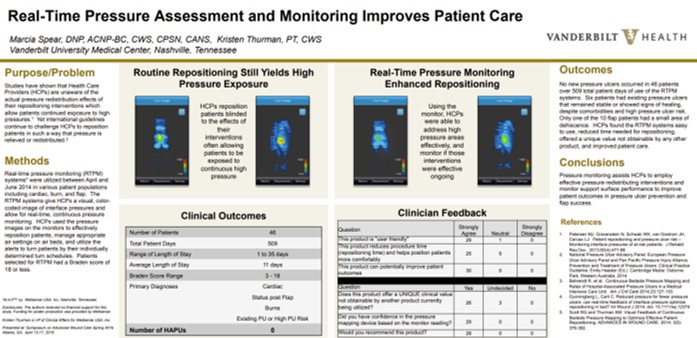
At Vanderbilt University Medical Center, real-time pressure visualization was used in 46 patients across 509 patient-days, resulting in zero new pressure injuries, high clinician satisfaction, improved repositioning effectiveness and patient comfort. Read Full Article
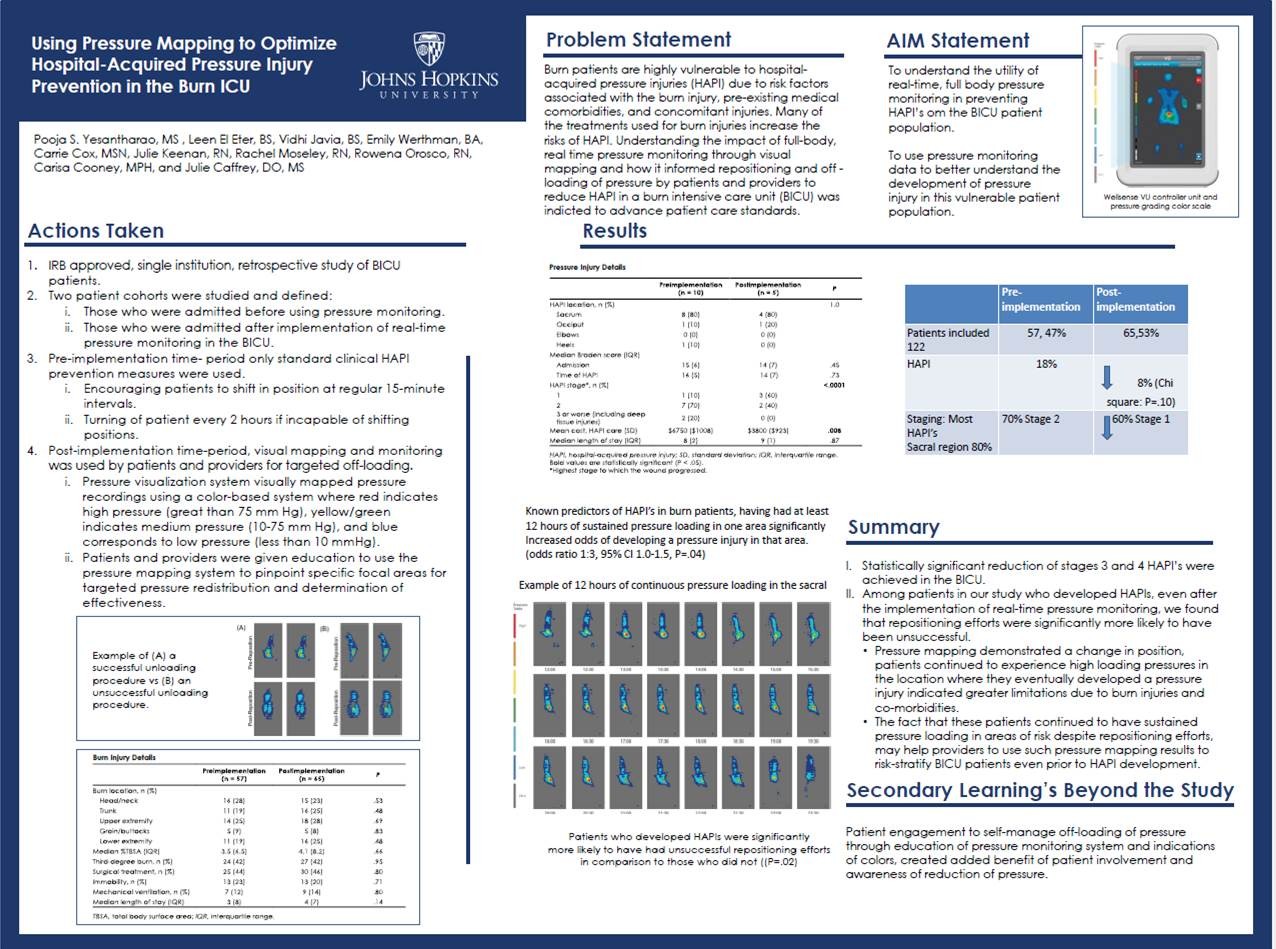
This Hopkins burn ICU study found that implementing real-time pressure mapping reduced HAPI-related care costs from about $6,750 to $3,800 per patient. These savings reflect direct pressure-injury treatment costs only (e.g., wound care), not systemic complications or extended hospitalization, and were driven by fewer and less severe pressure injuries Read Full Article