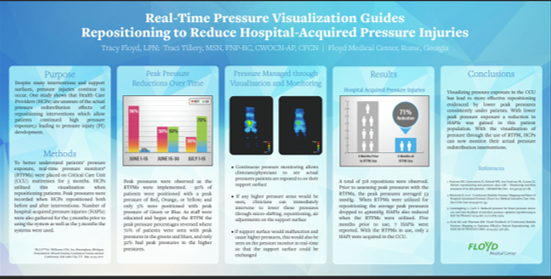
Real-Time Pressure Visualization Guides Repositioning to Reduce Hospital-Acquired Pressure Injuries

This real-world clinical poster from Floyd Medical Center shows that using a real-time pressure visualization monitor led to a 71% reduction in hospital-acquired pressure injuries (HAPIs) over 5 months in the critical care unit, by guiding staff to reposition patients more effectively and reduce peak pressure exposures. Read Full Article

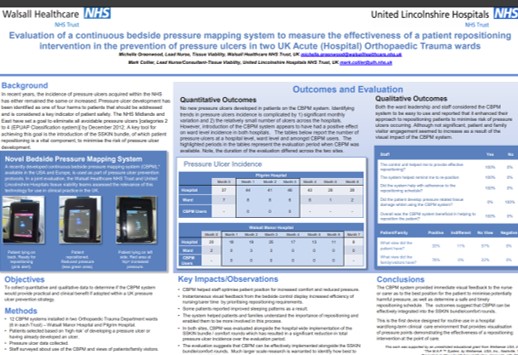
Evaluation of a Continuous Bedside Pressure Mapping System to Measure the Effectiveness of a Patient Repositioning Intervention in the Prevention of Pressure Ulcers in Two UK Acute (Hospital) Orthopaedic Trauma Wards

In two UK NHS hospitals, continuous bedside pressure mapping helped identify and reduce pressure ulcer incidence, with staff reporting 100% agreement that the system improved positioning, reduced risk, and was beneficial in care. Patients and families also responded positively, with 78% rating the system helpful. Read Full Article

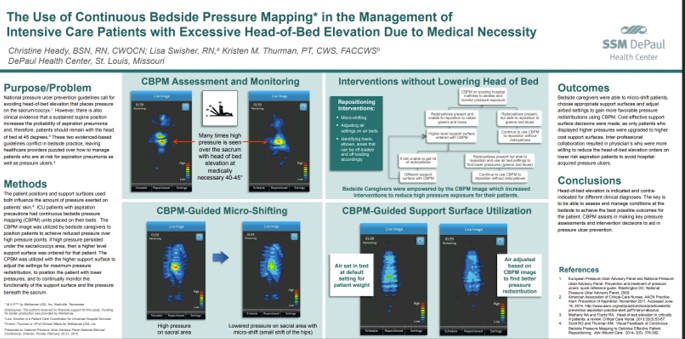
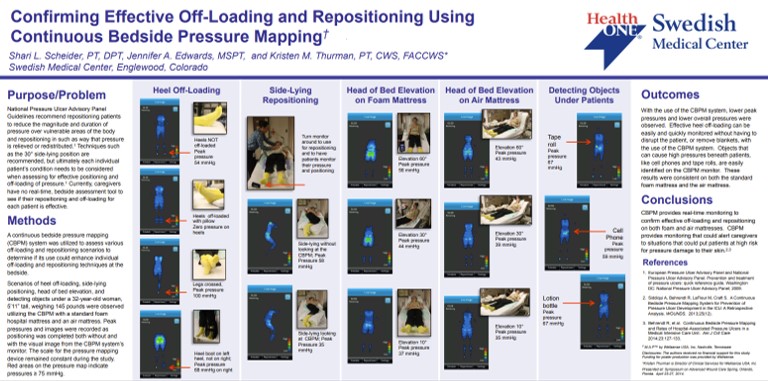
The Use of Continuous Bedside Pressure Mapping* in the Management of Intensive Care Patients with Excessive Head-of-Bed Elevation Due to Medical Necessity

SSM DePaul Health Center showed that continuous bedside pressure mapping identified dangerously high sacral pressures at 40–45° head-of-bed elevation, enabled simple micro-shifts to reduce pressure, and guided use of higher support surfaces only when truly needed—improving outcomes and lowering costs Read Full Article

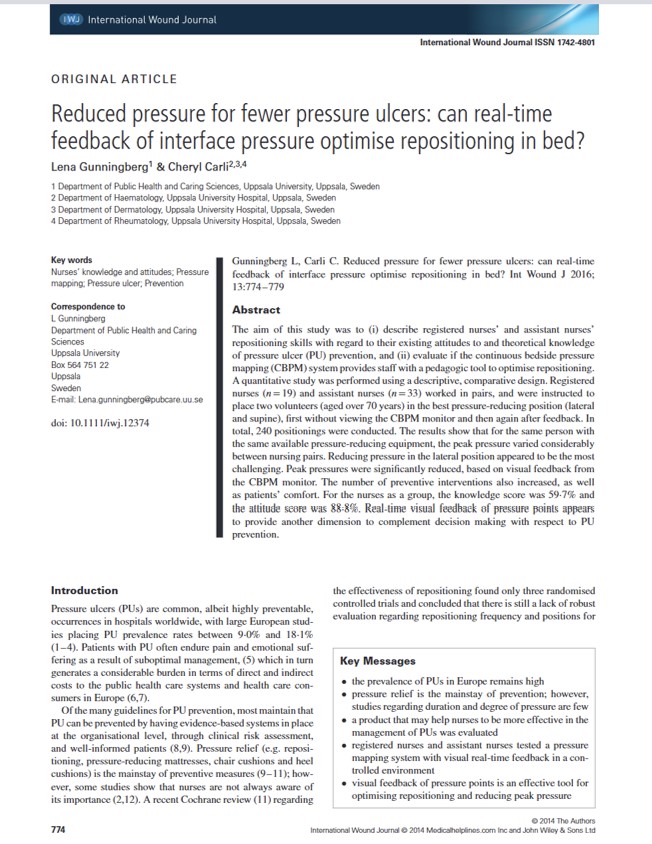
Reduced Pressure for Fewer Pressure Ulcers: Can Real-time Feedback of Interface Pressure Optimise Repositioning in Bed?

Real-time pressure visualization significantly reduced peak interface pressures and increased both patient comfort and the number of pressure-reducing interventions performed by nurses. Staff found the system easy to use and viewed it as a valuable tool for improving repositioning technique. Read Full Article